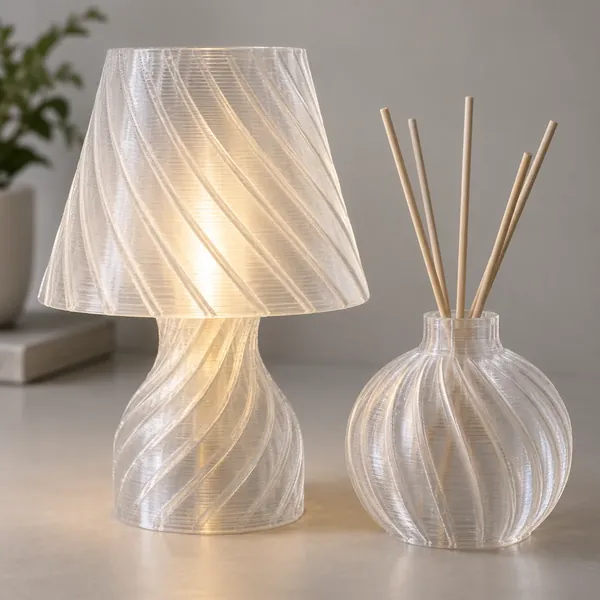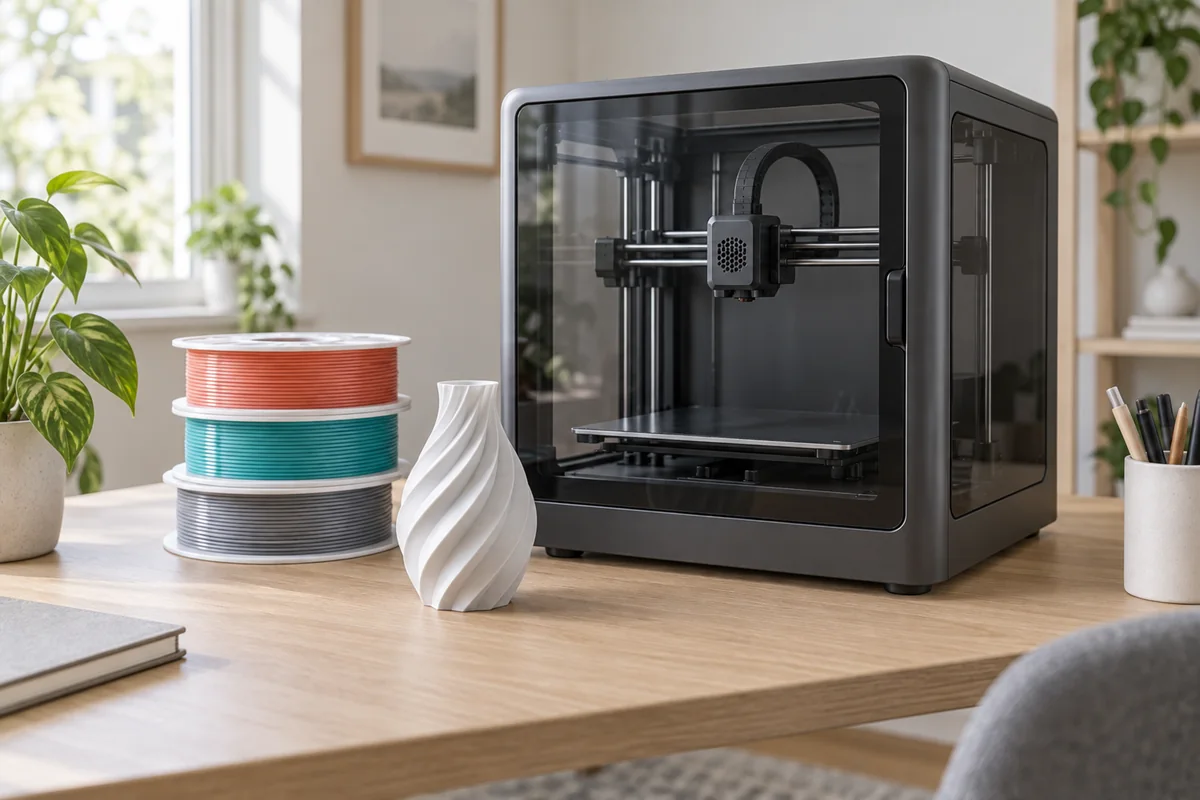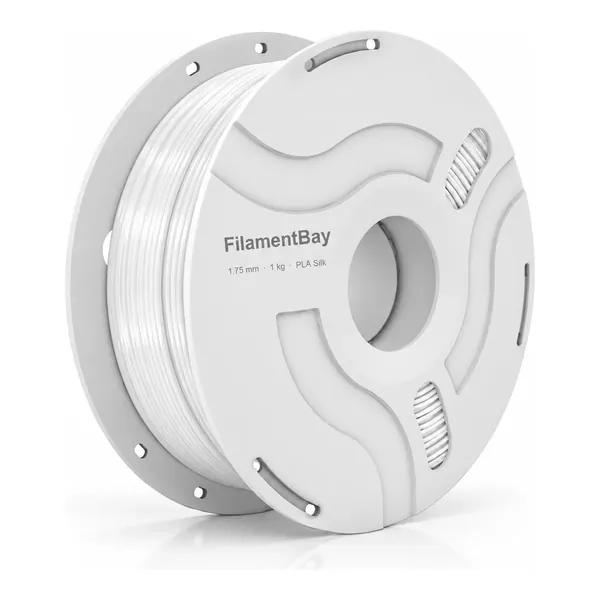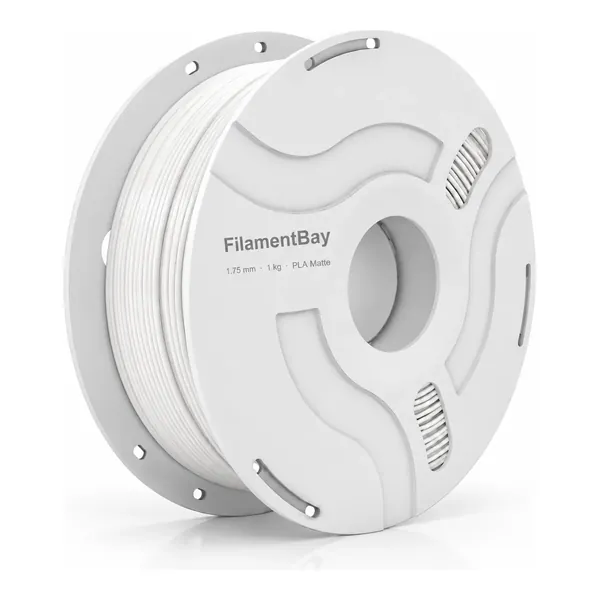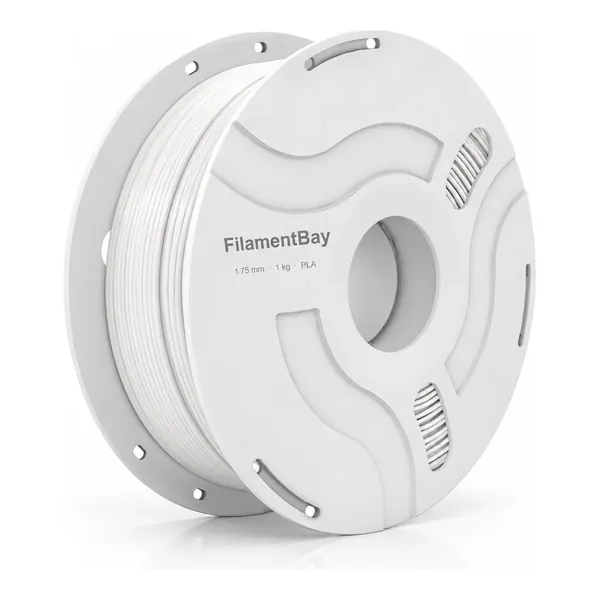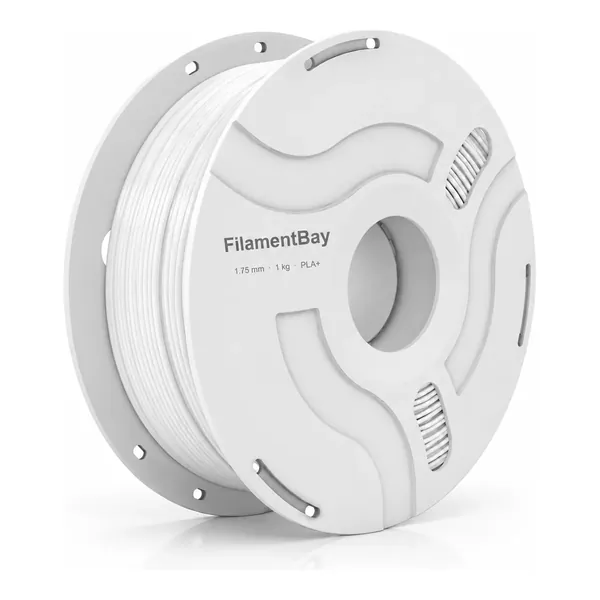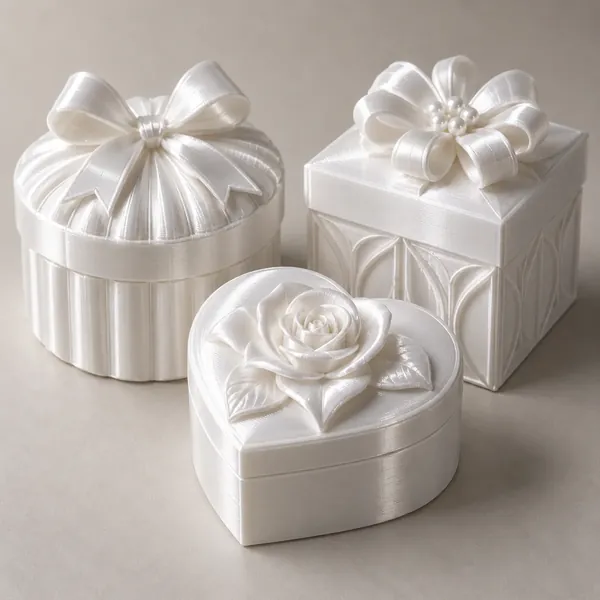
Illustrative imagery; not a record of a material validation test.
Silk vs matte PLA: choose the finish, then qualify the part
- Choose the surface effect with a physical sample under the intended lighting.
- Keep geometry, path and process recorded; gloss can change without changing the spool.
- Appearance approval does not qualify strength, UV durability or food contact.
Define the appearance question first
Start with where the object will be seen. A display sculpture may need highlights on curved faces; a label holder may need text that stays legible under overhead lighting. Write that viewing condition into the brief rather than choosing from a dramatic product image. Our cover is an application illustration, not a measured color or finish reference.
Silk and matte name surface effects, not a universal mechanical ranking. Polymaker’s finish guide gives instructions for its own products; those settings are not a FilamentBay recipe. Treat silk, matte, ordinary PLA and PLA+ as candidates to sample, with a separate question for any load, repeated flexing or heat exposure.
Make the comparison on the same coupon
We propose a small coupon containing a flat face, curved face, raised text and the seam location expected on the final part. Use the same model, orientation, layer height and intended outer-wall path for each candidate. Start from an appropriate material baseline and resolve visible extrusion defects before judging the finish.
Label every sample with grade, color, lot, nozzle, temperatures, cooling and outer-wall speed. Compare similar colors where available, but record color differences rather than pretending they are controlled away. Retain the actual samples: a camera’s exposure and white balance can change the impression. Photographs are useful records, not substitutes for an agreed physical reference.
Control the process and the view
Polymaker explains that some hotend/material combinations become dull when pushed too fast. A matte-looking patch can therefore be a process clue rather than the intended material finish. Gloss also responds to temperature, path and lighting. Use this original check table before attributing every difference to the grade; change one item per comparison.
| Variable | Hold or record | Decision |
|---|---|---|
| Lighting and viewing angle | Same lamp, distance and orientation | Compare under the actual viewing condition |
| Outer-wall speed and temperature | Save both in the project | Investigate abrupt gloss bands |
| Toolpath and seam | Same orientation and path strategy | Check visible faces and transitions |
| Grade, color and lot | Keep labels with retained samples | Approve the exact appearance reference |
Qualify the part after approving the finish
Print a representative part using the candidate appearance settings. Check dimensions, mating surfaces, fastener areas and any handling requirement against criteria set before the trial. If a geometry or process change is needed for function, inspect the finish again. An attractive coupon cannot establish layer bonding or durability of a differently oriented part.
Keep two decisions in the release record: appearance accepted against a named reference, and function accepted against a defined check. Neither matte nor silk is universally stronger or weaker. Request grade-specific evidence for performance claims; cosmetic approval provides no mechanical, UV or food-contact qualification. This workflow proposes a selection method and reports no completed FilamentBay comparison or guaranteed settings.
Sources and limits
- Polymaker: finish guide — Product-specific aesthetic examples, not transferable FilamentBay settings. Reviewed 2026-10-23.
- Polymaker: Printing Fast = Matte Surface Finish — Speed-related gloss changes for some hotend/material combinations. Reviewed 2026-10-23.
- FilamentBay evidence register — Supplier-data and image limits; no universal finish-strength ranking or end-use qualification. Reviewed 2026-10-23.
Compare all material grades · Profile validation status · Evidence register
Revision record
: Initial publication: added a common-coupon comparison, controlled viewing table and separate appearance and functional acceptance records.