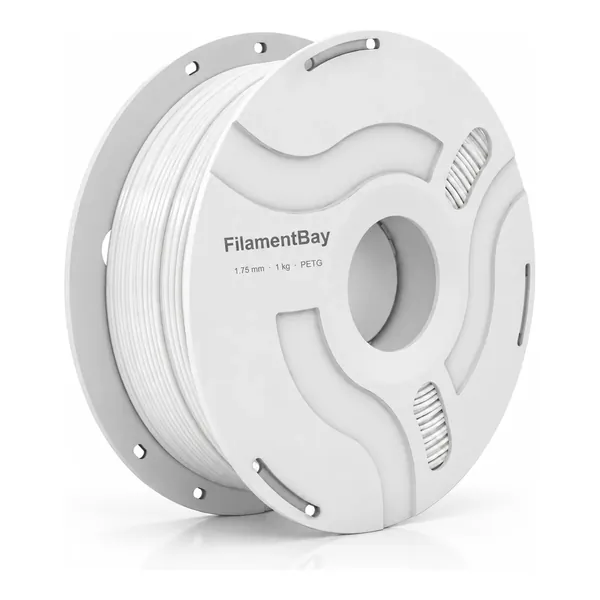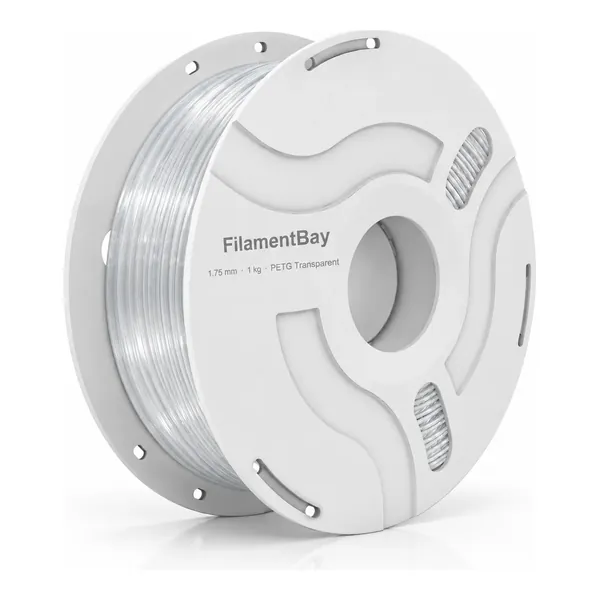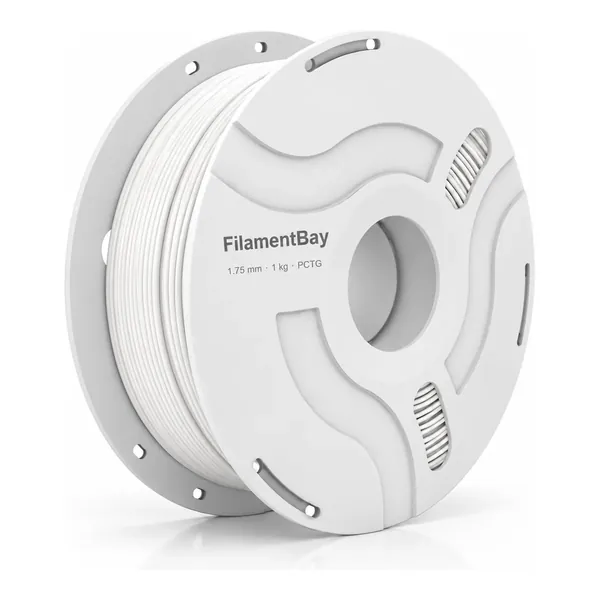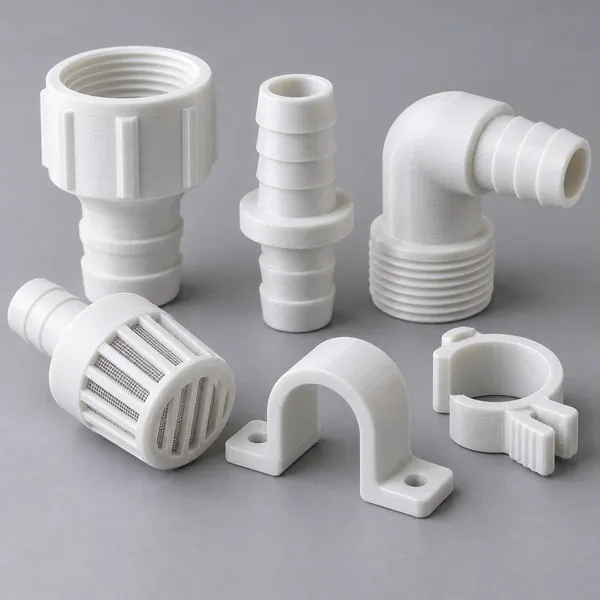
Illustrative imagery; not a record of a material validation test.
PETG stringing: find the cause before increasing retraction
- Save a repeatable baseline before tuning PETG stringing.
- Separate filament condition and nozzle contamination from slicer settings.
- Keep temperature and retraction inside the material and machine limits.
Make the symptom repeatable
A web of PETG hairs is an observation, not a diagnosis. Prusa's troubleshooting separates nozzle residue, temperature, retraction and filament condition. Begin with the supported profile for your exact printer, nozzle and material. Save it unchanged, then print a small coupon with two separated towers and repeated travel moves.
Record spool identity, storage history, nozzle, slicer version and profile. Keep tower spacing, orientation and cooling fixed. Photograph the coupon against the same dark background and note hairs, blobs and gaps separately. This is a proposed diagnostic protocol; the existing cover is an application illustration, not a photograph of completed trials.
Check filament condition and residue separately
Polymaker warns that moisture can cause stringing in its PETG. If storage is uncertain, follow the exact filament and spool maker's drying instructions, then repeat the saved coupon without altering its profile. Log the drying cycle and protect the spool afterward. An improvement supports a moisture contribution; it does not establish that moisture was the only cause.
Inspect the nozzle exterior for attached plastic or contamination using the printer's safe maintenance procedure. Clean only as documented and repeat separately. If feeding is intermittent, investigate spool drag, the feed path and nozzle condition before tuning. Changing drying, cleaning and retraction together leaves the cause unresolved.
Compare temperature before compensating with flow
Once material delivery is stable, compare a small temperature change within the filament supplier's range and printer limits. Use identical coupons and retain the baseline. Judge wall continuity and layer quality alongside hairs. A cleaner gap between towers is a poor trade if their walls become incomplete.
Keep flow calibration a separate comparison using the printer or slicer maker's method. Do not reduce flow merely to starve strings away, or raise it to disguise gaps. Record any change in surface ridges, start points and dimensions. Published settings for another PETG grade or hotend are references, not transferable limits.
Use the travel preview to choose the next test
Inspect whether the slicer actually retracts on the troublesome moves, where travel crosses exposed space and whether a wipe option is active. Compare one supported travel or retraction setting at a time. Retraction distance and speed depend on the feed system; use its documented boundaries rather than copying another machine's values.
Use this table to select a check, not to prove a cause from appearance. Stop tuning if the extruder repeatedly clicks, grinds filament or fails to resume extrusion.
| Observation | Next comparison | Keep fixed |
|---|---|---|
| Unknown storage; widespread hairs | Documented drying cycle | Saved coupon profile |
| Plastic collects on nozzle | Approved nozzle cleaning | Spool condition |
| Hairs with sound walls | In-range temperature change | Flow and travel |
| Ridges or inconsistent lines | Flow/feed calibration | Travel settings |
| Strings follow exposed travel | Travel preview, then retraction | Accepted material baseline |
Confirm the improvement on a representative part
Repeat the best coupon from a fresh start. Then print a small part that includes the original travel distances, seams and wall features. A simple tower cannot establish performance on a crowded plate or a different toolpath. Inspect the untouched result before removing strings so the comparison stays honest.
Save the accepted profile with its spool and nozzle record. If symptoms return, compare that record before adding more retraction. Share the baseline, changed variable, slicer travel preview and repeat photographs when requesting support. The aim is a repeatable acceptable part, not a promise that one setting eliminates every PETG string.
Sources and limits
- Prusa: Stringing and oozing — Possible residue, temperature, retraction and moisture contributions; numerical settings apply to the named machines. Reviewed 2026-10-23.
- Prusa: PETG — Material-specific temperature and cooling tradeoffs; Prusa profiles are not universal PETG settings. Reviewed 2026-10-23.
- Polymaker: PETG product documentation — Moisture-related stringing warning for Polymaker PETG; its recipes are not FilamentBay grade specifications. Reviewed 2026-10-23.
- FilamentBay: Drying filament — Related drying workflow; internal guidance, not independent experimental evidence. Reviewed 2026-10-23.
- FilamentBay: New filament calibration workflow — Related baseline and calibration record; internal guidance, not external validation. Reviewed 2026-10-23.
- FilamentBay evidence register — Supplier-data boundaries and image provenance; no completed stringing trial is claimed. Reviewed 2026-10-23.
Compare all material grades · Profile validation status · Evidence register
Revision record
: Initial publication: added a repeatable coupon, separated moisture and residue checks, and bounded temperature, flow, travel and retraction comparisons.