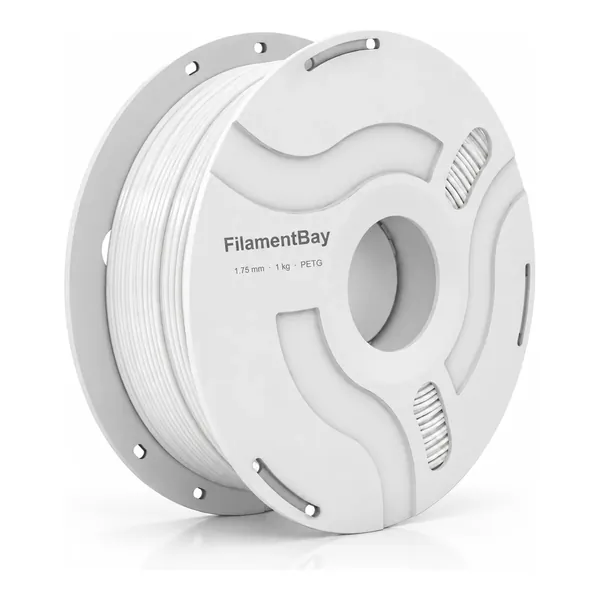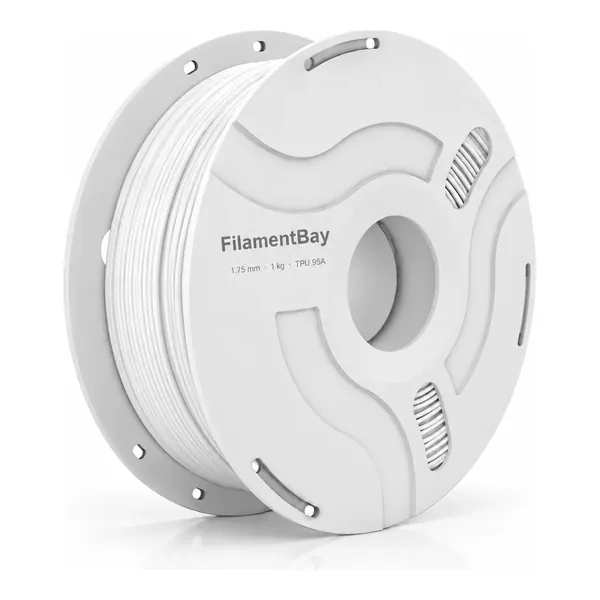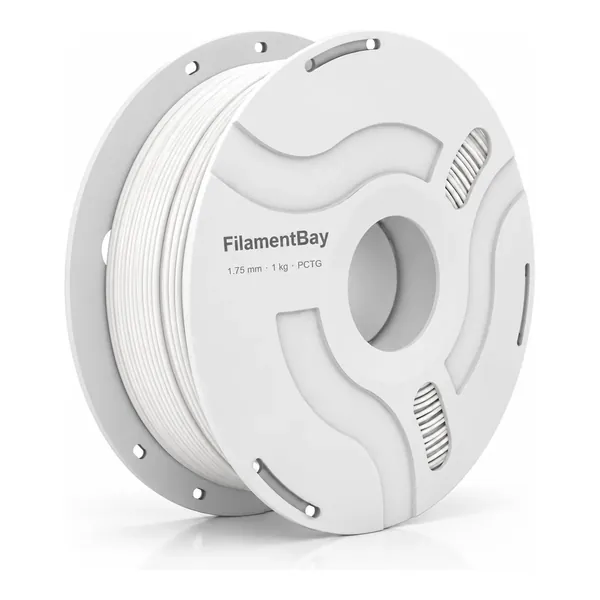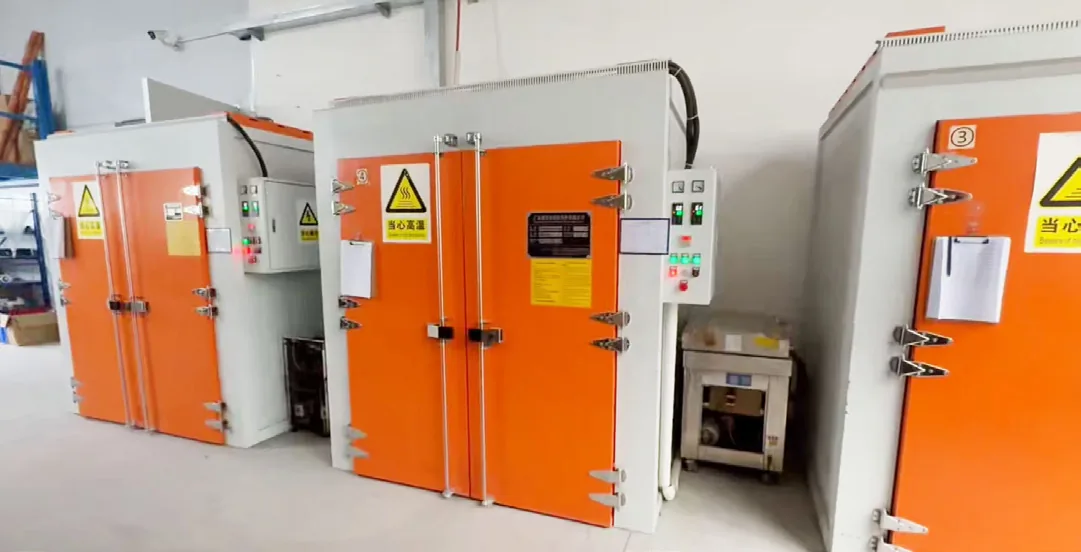
Illustrative imagery; not a record of a material validation test.
Drying filament: temperatures, times and when it is worth it
- Drying conditions depend on grade, formulation, spool and dryer; one temperature/time recipe is not validated across our catalog.
- Dry-box humidity describes the air, not the water already inside the filament.
- Compare a repeatable coupon before and after appropriate conditioning, and keep a record.
Check whether conditioning changes the problem
Bubbles, popping, rough extrusion and persistent strings can indicate moisture, but also inspect nozzle contamination, flow and temperature. Keep a baseline coupon and a photo under the same lighting. A sealed bag or elapsed number of days is not a measurement of moisture.
Prusa’s drying guide uses different conditions for different materials and discusses storage. Those recommendations cannot automatically be transferred to an unknown formulation or spool. Use the exact supplier instructions and the dryer manual together.
Per-material decision table
FilamentBay grade-specific drying endpoints and spool heat limits are not yet publicly validated. Any catalog drying suggestion is a provisional starting point, not an assured cure. The table records the information to confirm before heating; an unknown is intentionally not replaced by a universal temperature.
| Material family | Confirm before drying | How to check progress |
|---|---|---|
| PLA, PLA+, Silk, Matte | Exact formulation and spool heat limit | Same coupon; inspect spool deformation |
| Wood PLA | Filled-grade guidance and spool limit | Compare bubbling and surface; inspect flow |
| PETG, Transparent, Glitter | Exact grade and dryer circulation | Compare strings and bubbles without changing retraction |
| TPU 85A–72D | Hardness-specific guidance, spool limit | Compare extrusion and feed stability |
| PCTG, PC | Grade-specific conditions; dryer capability | Repeat coupon; do not assume a low setting is effective |
| ABS, ASA, ABA | Separate instructions for each formulation | Repeat coupon; distinguish moisture from warping |
| CF, ESD composites | Identify matrix resin and additives first | Condition per exact grade; do not infer ESD performance |
Run one controlled drying cycle
Record grade, color/batch, time since opening, dryer model, selected setting, measured chamber temperature if available and spool construction. Check the manufacturer’s maximum temperature for both filament and spool. A displayed dryer temperature may differ from the air at the spool.
Choose conditions supported for that grade. Keep airflow and placement consistent. After conditioning, print the baseline coupon with the same slicer project. Record improvement, no change or deterioration instead of assuming success because the timer finished.
If there is no improvement, check the temperature actually achieved and reconsider the diagnosis. Do not repeatedly raise heat without a supported limit. Where no grade-specific instruction is available, ask for it before proceeding.
What counts as a drying endpoint
A practical print-quality screen passes when the repeated coupon meets the previously chosen surface and extrusion criteria. It does not certify a moisture percentage. A measured moisture endpoint needs a suitable method, sample handling and an acceptance limit supplied for the process.
Hypothetical record: coupon A has bubbles; coupon B after a documented cycle has none under identical settings. That would support a process improvement, not proof that all spools need that cycle. No such test result is claimed for FilamentBay here.
Store to preserve the result
Reseal with maintained desiccant and minimize open-air time. Log the date and conditioning cycle so a future failure has context. For long jobs, consider a suitable dry-feed arrangement that does not add excessive spool drag.
A low box RH reading does not prove a wet spool has dried. Do not use a kitchen oven shared with food as a default filament dryer; use equipment intended for the task with appropriate control and the manufacturer’s instructions. We have no evidence for a universal TPU time threshold that makes it brittle.
Sources and limits
- FilamentBay evidence and editorial policy — Supplier brochure values, missing test conditions and how to submit corrections; not certification of printed parts. Reviewed 2026-09-08.
- Prusa: Drying filament — Material-specific drying and storage principles; its temperatures apply to its stated materials and spool limits, not all FilamentBay grades. Reviewed 2026-09-08.
Compare all 20 grades · Profile validation status · Evidence register
Revision record
: Removed the universal recipe, RH pass rule and TPU brittleness deadline; added grade-specific information gaps and a controlled drying record.
First published 2026-09-06. To flag an error, contact the FilamentBay team with the guide URL, disputed statement and supporting source. We review the evidence and record substantive corrections here.