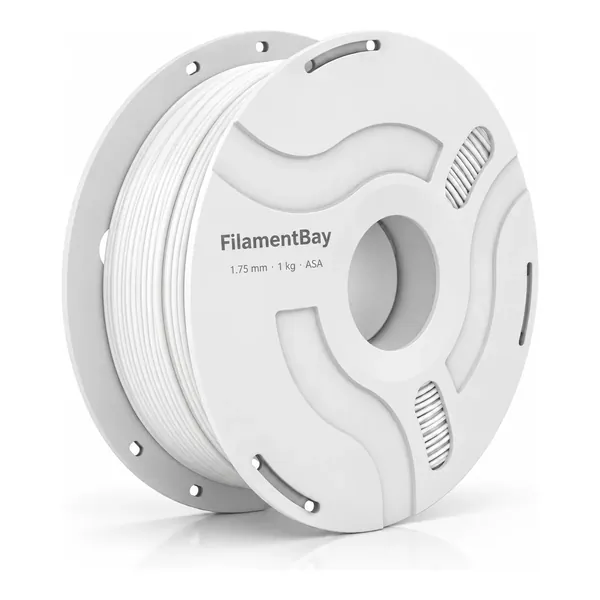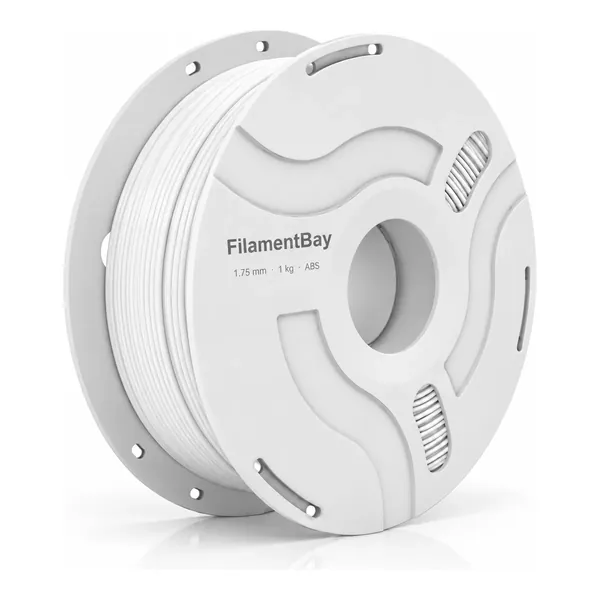
Illustrative imagery; not a record of a material validation test.
ASA vs ABS: choosing and testing an outdoor material
- ASA is a candidate for outdoor use because of its general weathering resistance; no FilamentBay outdoor lifetime is established.
- ABS and ASA need separate material profiles and printer checks.
- Compare printed samples under the intended exposure and load before relying on either material.
Why outdoor exposure changes the choice
Prusa’s ASA guide identifies resistance to UV and temperature as reasons to consider ASA outdoors. That supports a material-family selection direction, not a claim that sunlight cannot attack ASA or that a part will last a specified number of years.
Color, formulation, stress, heat and exposure all matter. ABS can be a candidate for indoor parts, but neither price nor a shared polymer family establishes equal mechanical performance. Our provisional ASA data does not supply a controlled comparison with ABS.
Check the machine before selecting the spool
Confirm the hotend, bed, enclosure and ventilation requirements for the exact grade. An enclosure used for temperature stability does not itself establish adequate emission control. Follow the printer and material safety documentation; odor is not an exposure measurement.
| Check | ABS | ASA |
|---|---|---|
| Material preset | Must identify ABS | Must identify ASA; do not inherit PLA |
| Nozzle and bed | Use exact grade and printer limits | Use exact grade and printer limits |
| Thermal stability | Check enclosure and draft guidance | Check enclosure and draft guidance |
| Drying | Grade/spool-specific conditions | Grade/spool-specific conditions |
| Outdoor evidence | No lifetime established here | Weathering candidate; no lifetime established here |
When corners lift or layers split
First check the build surface, first layer and drafts. Keep the model and orientation fixed. Change one factor such as brim geometry or an approved enclosure setup, then repeat the same coupon. Do not compensate for lifting by exceeding the bed rating.
If a small coupon passes but the full part lifts, thermal stress and geometry may dominate. Try a representative corner or shortened section of the real design. Record lift after cooling and assembly fit; a tiny cube does not qualify a large enclosure.
Plan an exposure screen with a control
Keep an unexposed sample from the same print batch. Record color, dimensions, orientation, exposure location, mounting and loads. At chosen intervals, compare discoloration, cracks, fit and a repeatable functional check with the control.
This proposed screen helps detect change in your application. It is not accelerated weathering certification and cannot predict years of service from a short trial. Replace the design if inspection shows cracking, distortion or loss of function.
Make the decision explicit
Choose ASA as an outdoor candidate when its process requirements fit your equipment, then obtain grade evidence and test. For indoor use, compare ABS against other appropriate materials on cost, finish and accepted-part performance.
If the printer cannot meet the grade’s required conditions, select a different process or material rather than expecting an imported preset to solve the hardware limit.
Sources and limits
- FilamentBay evidence and editorial policy — Supplier brochure values, missing test conditions and how to submit corrections; not certification of printed parts. Reviewed 2026-09-08.
- Prusa: ASA material guide — General outdoor-use and printing considerations; no FilamentBay exposure lifetime or comparative strength test is supplied. Reviewed 2026-09-08.
Compare all 20 grades · Profile validation status · Evidence register
Revision record
: Removed lifetime, equal-strength and identical-profile claims; added hardware checks, warping diagnosis and a controlled exposure screen.
First published 2026-09-06. To flag an error, contact the FilamentBay team with the guide URL, disputed statement and supporting source. We review the evidence and record substantive corrections here.