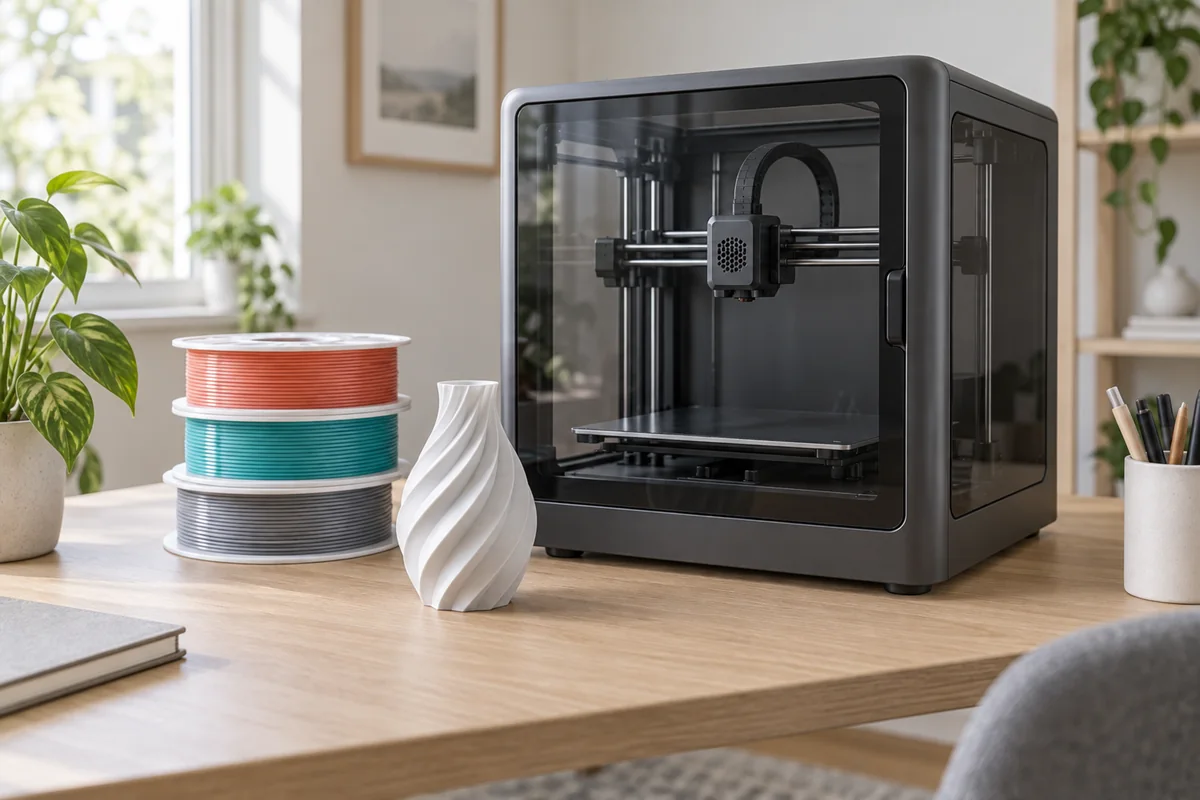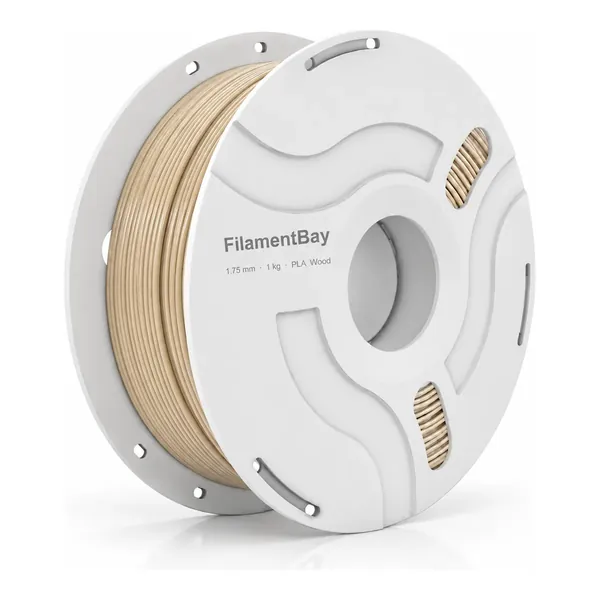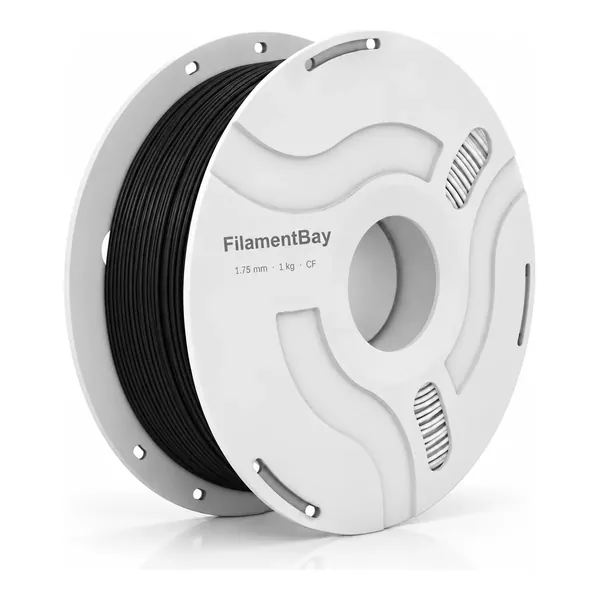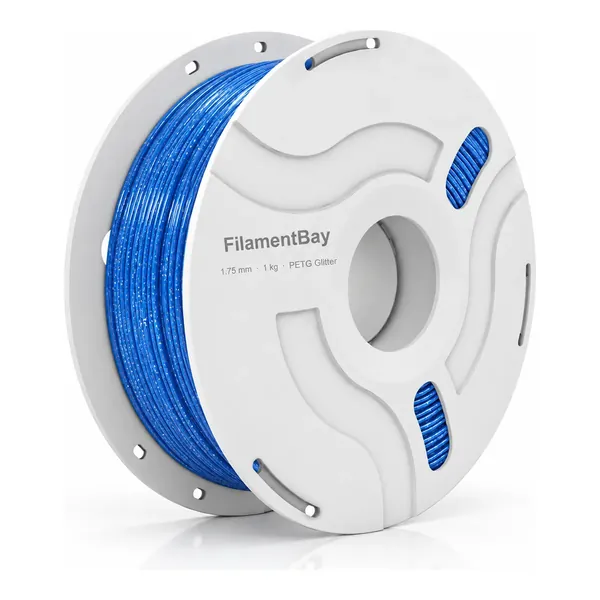
Illustrative imagery; not a record of a material validation test.
Which filament needs a wear-resistant nozzle? Carbon fiber, wood and filled grades
- Abrasive fiber-filled grades require a suitable hardened or other wear-resistant nozzle.
- A larger bore addresses particle passage; it does not make brass wear-resistant.
- Confirm additive identity, base polymer and the exact nozzle with the material and printer makers.
Identify the grade before selecting hardware
A decorative label is not a complete hardware specification. Ask for the base polymer, additive type, recommended minimum bore and whether the grade is abrasive. Match those answers to the exact printer, hotend and nozzle SKU. A nozzle that physically fits may still lack approval for that additive or machine.
Prusa identifies carbon, glass and Kevlar fibers as abrasive and calls for a hardened nozzle. Wood and glitter are broader descriptions: do not assume every wood-filled or sparkling grade has the same wear behavior. FilamentBay CF base-polymer identity is unconfirmed, so neither a PLA nor a PA preset is established for it.
Separate particle passage from abrasion resistance
Use this proposed selection table when preparing a sample request. The bore controls an opening, while nozzle material and construction determine suitability for wear. A larger brass opening can still wear. A small hardened opening can still clog with an unsuitable filler. Confirm both requirements rather than using either as a shortcut.
| Candidate | Question to resolve | Decision before a trial |
|---|---|---|
| Carbon/glass/Kevlar filled | Which approved wear-resistant nozzle and bore? | Use confirmed abrasive-material hardware |
| Wood filled | What particle and minimum-bore guidance applies? | Follow exact grade requirements |
| Glitter or mineral filled | Is this additive abrasive? | Obtain grade-specific confirmation |
| Unidentified filled grade | Are polymer and additive documented? | Hold profile selection until clarified |
Recheck the process after changing a nozzle
Follow the printer maker’s replacement instructions rather than a generic installation recipe. Once fitted, record nozzle material, diameter and model in the slicer project. Re-run the machine’s required checks. If the diameter changed, select a matching process profile; leaving the old diameter selected undermines every later comparison.
Prusa notes that hardened steel has different thermal behavior from brass. Treat a hardware change as a reason to revisit temperature and usable flow through your machine’s documented calibration, not to copy a fixed temperature increase. Start from an appropriate manufacturer baseline and print a small geometry with walls, corners and an opening relevant to the intended part.
Keep a wear record and an acceptance sample
Our suggested workshop record pairs nozzle identity with filament grade, color, lot, printed quantity and a reference coupon. Photograph the coupon under consistent lighting and check critical fit with the same gauge. Retain an accepted sample so a later change in line shape or dimensions prompts inspection rather than an unexplained profile adjustment.
If quality drifts, check moisture, feed resistance and obstruction as well as nozzle wear. Retire or inspect hardware using the maker’s criteria; an appearance change alone cannot measure bore wear. FilamentBay CF downloads remain withdrawn pending base mapping. Related product links are candidates for evaluation, and the cover illustrates an application rather than a completed compatibility trial.
Sources and limits
- Prusa: E3D V6 nozzles — Nozzle wear and thermal distinctions; not approval for every nozzle SKU. Reviewed 2026-10-23.
- Prusa: Fiber-filled composite materials — Abrasive-fiber hardware guidance; no FilamentBay material validation. Reviewed 2026-10-23.
- FilamentBay evidence register — Grade-identity gaps and illustrative-image limits. Reviewed 2026-10-23.
- FilamentBay profiles — CF preset withdrawal and unvalidated starting-setting status. Reviewed 2026-10-23.
Compare all material grades · Profile validation status · Evidence register
Revision record
: Initial publication: separated abrasion from bore selection and added grade-identification, recalibration and wear-record checks.