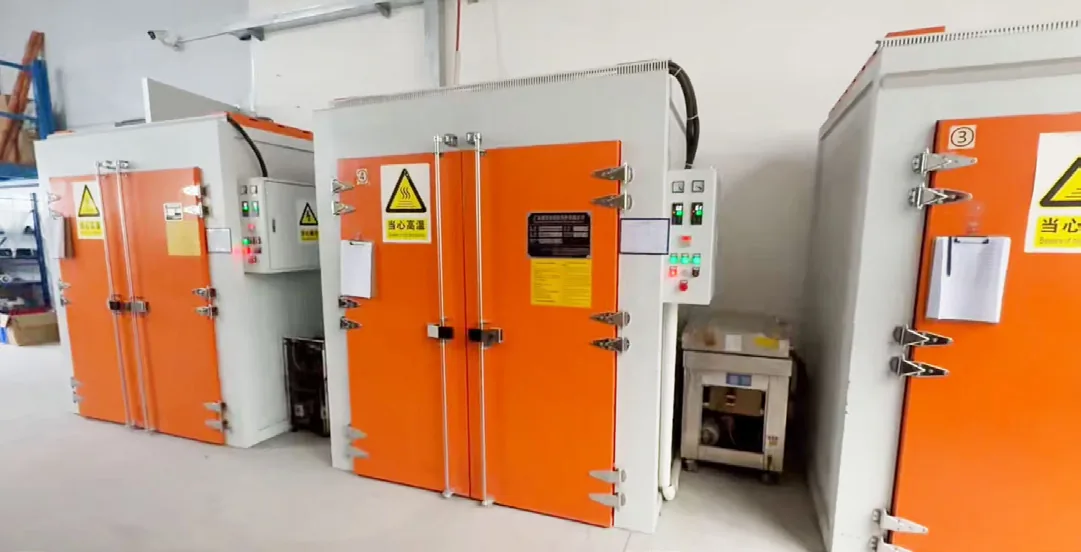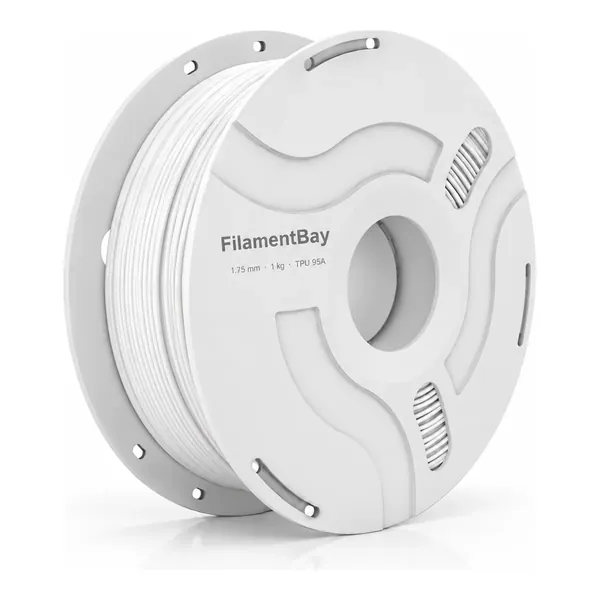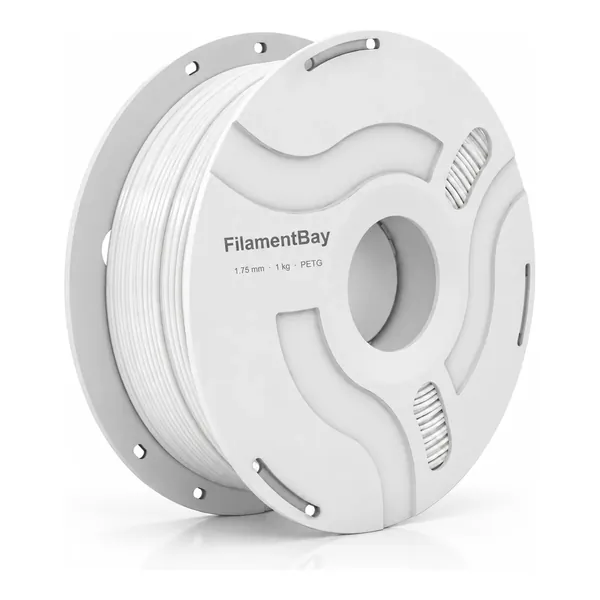
Illustrative imagery; not a record of a material validation test.
Choosing a filament dryer: a checklist for your materials and spools
- Choose equipment around the exact material, spool and operating instructions; a higher maximum temperature is not a quality ranking.
- Active drying and dry storage solve different jobs. Check how moisture leaves during drying and how the box seals afterwards.
- Measure spool fit and the complete feeding route. This source-based checklist contains no tested dryer ranking or FilamentBay equipment review.
Start with the job: dry a wet spool or keep it dry?
If conditioning changes a repeatable print problem, you need a supported drying process. If a conditioned spool needs protection between jobs, sealed storage with maintained desiccant may be the immediate need. A product called a dry box can be storage-only, an active dryer or one part of a modular system; read what is included.
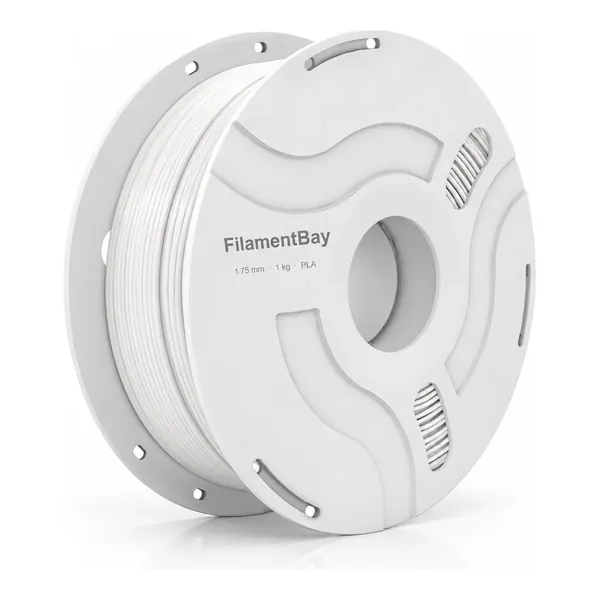
Prusa describes dedicated dryers that remove moisture and boxes used to maintain low humidity. Polymaker sells a storage box separately from its drying dock. Check that a listing contains the heating component you need. The cover illustrates a filament spool for context, not a dryer test. For temperature and elapsed-time references, use our existing drying guide.
Match the material and spool limits together
List the exact grades you use and obtain their current conditioning instructions. Compare the required process with the equipment’s supported range and control method. A material label such as PLA or TPU is not enough to select a universal cycle, and a dryer’s maximum setting is not a promise of uniform temperature throughout a loaded spool.
Check spool construction as well as polymer. Prusa documents different preparation and heat limits across its own spool generations; appearance and brand familiarity are insufficient. Resolve conflicting instructions or unknown limits with the supplier before purchasing around an assumed setting.
Find out how air and moisture move
Look for the manufacturer’s instructions for air circulation, exhaust openings and desiccant. In Prusa’s Memmert workflow, exhaust-flap position changes moisture removal and temperature stability. The PolyDryer manual instead instructs removing its airlocks for drying and replacing them for sealed storage. These are model-specific arrangements, not interchangeable instructions.
Ask which ports remain open during the intended cycle and how the load must be positioned. Keep the prescribed clearances; do not fill a chamber so tightly that the documented airflow path is obstructed. A humidity display measures the air at its sensor, not a verified water-content endpoint inside the filament.
Measure usable capacity, not only the kilogram label
Measure spool outside diameter and width against the manual’s clearances and supports. Include damaged flanges, protruding hubs and turning/removal space. Products advertised for the same weight can fit differently; larger box variants may need different accessories.
For batch drying, check whether the documented load permits your spool count and material combination. Prusa’s oven procedure calls for spacing between spools and separate treatment of materials with different requirements. Buy capacity for the batches you can actually process together, rather than assuming every available position can use the same cycle.
Check the complete route if you will print from the box
Confirm the permitted strand diameter, outlet and tubing arrangement, plus whether feeding is supported during an active cycle or only from storage. Plan the path to the printer so a lid, tight turn or unsuitable roller does not add drag. Follow the printer’s external-feed instructions; a dryer outlet does not establish AMS or material compatibility.
Consider how you will change spools, close unused outlets and store the spool after drying. A supported sealed-feed arrangement can reduce repeated handling, but you still need a repeatable loading check. Keep a direct-feed baseline when diagnosing whether a new box or tube has introduced a feeding problem.
Read the controls and operating conditions before ordering
Check the displayed temperature or preset, timer start, ambient limits and stop/error procedure. Polymaker explains that temperature varies around its spool; one number cannot describe every point. A humidity sensor observes the enclosure, not the readiness of an unknown grade.
Review the maintenance burden: desiccant access, cleaning, seals and replacement parts. Check power-adapter, surface and supervision instructions. In particular, a continuous-mode feature is not permission to leave a unit unattended; follow that model’s manual. Reject a setup whose documented operating limits do not fit your workspace.
Write a short acceptance checklist for the purchase
Record the manual version and supporting evidence. Compare conditioning, transfer, storage and feeding together, beyond a maximum-temperature claim or material list. This document-based method contains no measured comparison of drying speed, temperature uniformity or energy use.
| Question | Evidence to obtain |
|---|---|
| Does it cover my grade and spool? | Current material instructions and supported equipment process |
| Will my spool and batch fit? | Dimensions, support and spacing in the manual |
| How does moisture leave? | Specified ports, airflow and desiccant procedure |
| Can I feed my printer? | Supported outlet, tubing and feeding mode |
| Can I operate it as instructed? | Power, ambient, timer, supervision and maintenance requirements |
Sources and limits
- Prusa: Drying filament — Manufacturer guidance distinguishes drying and storage, checks material/spool limits and discusses dedicated dryers; it does not validate FilamentBay drying recipes. Reviewed 2026-10-27.
- Polymaker: PolyDryer user manual, English pages 1–7 — Model-specific dock/box distinction, spool dimensions, airlocks, outlet, operating conditions and continuous-mode precautions; not a universal dryer setup. Reviewed 2026-10-27.
- Prusa: Filament drying in a Memmert UF oven — Source-specific airflow, exhaust, spool spacing and timer workflow illustrate checks to make in an equipment manual; oven settings must not be copied to other dryers. Reviewed 2026-10-27.
- Polymaker: PolyDryer product information — Manufacturer describes model-specific temperature distribution, separate box sizes and feed/storage features. Marketing comparisons and independent performance claims are not adopted. Reviewed 2026-10-27.
- FilamentBay: Drying temperatures and workflow — Companion guide for conditioning decisions and explicitly attributed material references; equipment selection here is a separate intent. Reviewed 2026-10-27.
Compare all material grades · Profile validation status · Evidence register
Revision record
: Initial source-based equipment checklist; distinguishes drying, storage, spool fit, airflow and feeding without an equipment ranking or invented test results.